
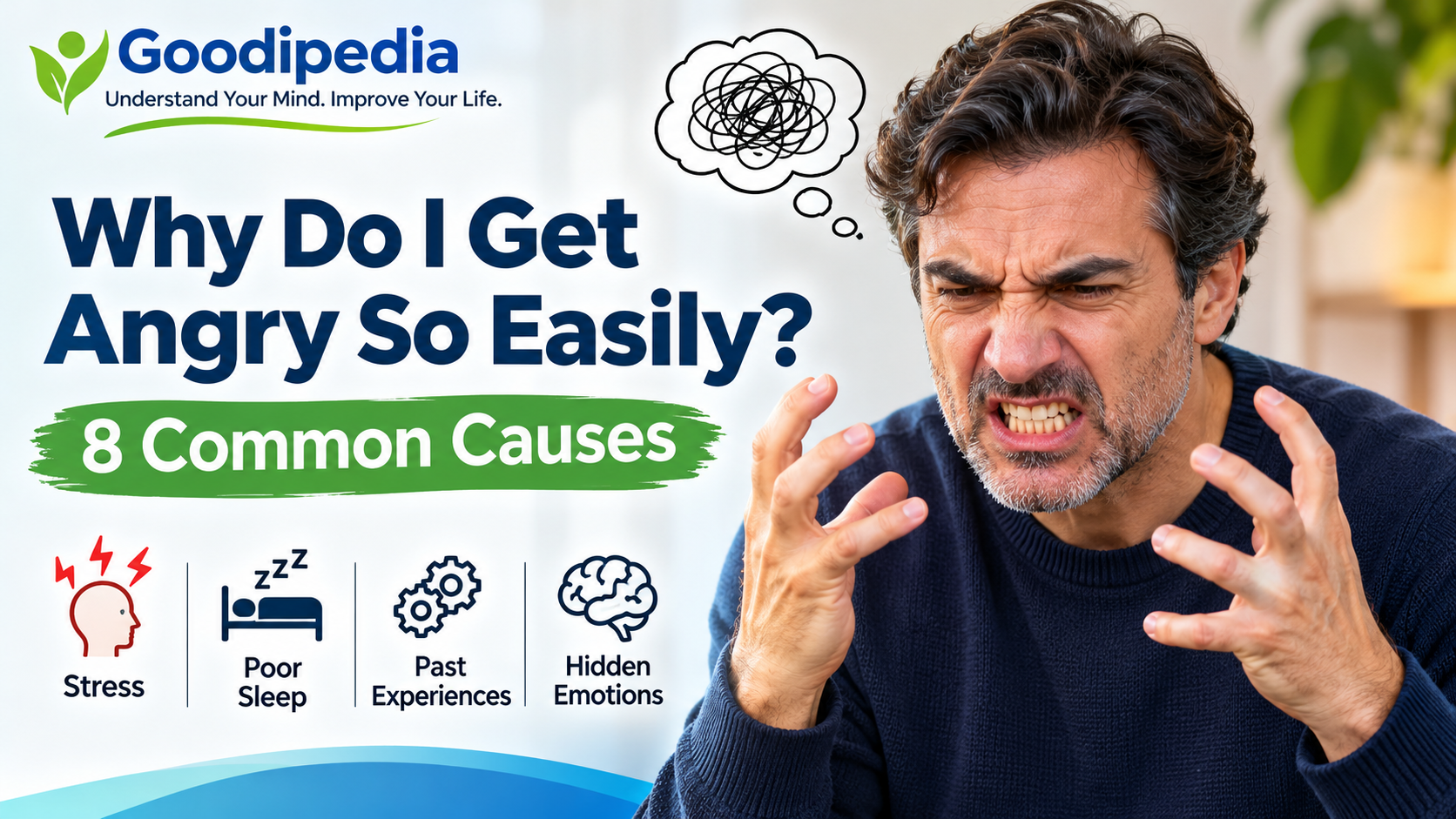
Have you ever found yourself getting angry over something small, only to wonder afterwards why you reacted so strongly?
Perhaps someone interrupted you while you were speaking. A driver cut in front of you. Or a family member made a comment that seemed harmless but somehow pushed you over the edge.
You might even ask yourself, “Why do I get angry so easily when other people seem to stay calm?”
If this sounds familiar, you’re not alone. Anger is a normal human emotion, but when it appears frequently, feels overwhelming, or seems disproportionate to the situation, it can become confusing and exhausting.
The good news is that anger usually has understandable causes. By recognising what lies beneath your reactions, you can begin to respond differently.
In this article, we’ll explore why some people experience anger more easily than others, what happens in the brain during anger, and how to identify the deeper emotions and experiences that may be contributing to your reactions.
Is It Normal to Get Angry Easily?
Yes. Everyone experiences anger, and some people naturally have a lower threshold for frustration than others.
Anger is not necessarily a sign of aggression or poor character. It is an emotional response that often arises when we perceive a threat, injustice, frustration, or violation of our expectations.
For example, imagine waiting in a queue for twenty minutes when someone suddenly steps in front of you.
You might feel angry because the situation seems unfair.
Someone else might simply ignore it.
The difference does not necessarily mean one person is emotionally healthier than the other. Our reactions are influenced by temperament, previous experiences, stress levels, learned behaviours, and how we interpret situations.
However, if anger frequently damages your relationships, affects your work, or leaves you feeling guilty afterwards, it may be worth examining its underlying causes.
1. Chronic Stress Can Make You More Irritable
One of the most common contributors to frequent anger is ongoing stress.
When you’re under pressure, your body activates stress-response systems that help you deal with challenges.
These responses can be useful in the short term. But when stress becomes persistent, you may feel constantly tense, mentally exhausted, and less able to tolerate everyday frustrations.
Consider two situations.
Situation A: You’ve had a relaxing weekend, slept well, and feel comfortable. Someone accidentally spills coffee on your desk.
You might respond calmly.
Situation B: You’ve been working long hours, worrying about money, and sleeping poorly. The same accident happens.
This time, you might react angrily.
The event is identical, but your emotional resources are different.
Stress does not automatically cause anger, but it can make strong emotional reactions more likely.
What can you do?
Start by asking yourself whether your anger increases during stressful periods.
You may notice that you’re more irritable when dealing with financial pressure, work deadlines, family responsibilities, or uncertainty.
Recognising this connection can help you address the pressure contributing to your anger rather than focusing only on the immediate trigger.
2. Anger May Be Covering Other Emotions
Sometimes anger is the emotion we notice most clearly, while other uncomfortable feelings remain less obvious.
These may include:
- Fear
- Embarrassment
- Hurt
- Rejection
- Disappointment
- Helplessness
- Insecurity
For example, imagine sending an important message to someone and receiving no reply for several hours.
Your first reaction might be anger:
“Why are they ignoring me?”
But beneath that anger, you may be feeling rejected or worried that the relationship is becoming less important to the other person.
Similarly, someone who becomes angry when criticised may actually feel embarrassed, inadequate, or afraid of failure.
Psychologists sometimes describe anger as a secondary emotion when it develops in response to another feeling. However, anger can also arise directly, such as when we experience unfair treatment.
What can you do?
When you notice anger building, ask yourself:
“What else am I feeling right now?”
Instead of automatically responding to the anger, try identifying whether you’re also feeling hurt, frightened, disappointed, or overwhelmed.
Understanding the underlying emotion may help you communicate your needs more clearly.
3. Your Childhood Experiences May Influence Your Reactions
Our early experiences can shape how we understand and express emotions.
Children learn emotional behaviours partly by observing the adults around them.
If you grew up in an environment where shouting was a common response to disagreement, you may have learned that raising your voice is a normal way to express frustration.
Alternatively, if expressing anger was discouraged or punished, you may have learned to suppress it until it becomes difficult to manage.
This does not mean childhood experiences determine your adult behaviour permanently.
Rather, they can contribute to patterns that continue unless we become aware of them.
An example
Imagine a child who regularly witnesses arguments in which family members shout at each other.
As an adult, that person may automatically raise their voice during disagreements, even when they do not intend to be aggressive.
The behaviour may feel natural because it was repeatedly observed during childhood.
What can you do?
Reflect on how anger was expressed in your family when you were growing up.
Was it acceptable to disagree calmly? Were people encouraged to discuss their feelings? Or did disagreements frequently involve shouting, silence, or punishment?
These questions may help you recognise learned patterns that you can gradually change.
4. Lack of Sleep Can Reduce Emotional Control
Sleep plays an important role in emotional regulation.
Research suggests that insufficient sleep can increase negative emotional reactions and make it harder to manage frustration.
When you’re sleep-deprived, ordinary inconveniences may feel more difficult to tolerate.
You may also find yourself reacting before fully considering the situation.
For example, a minor disagreement with a colleague might seem manageable after a good night’s sleep but intensely frustrating after several nights of poor rest.
What can you do?
Pay attention to whether your anger is worse after insufficient sleep.
Maintaining a consistent sleep schedule, reducing late-night distractions, and allowing enough time for rest may improve emotional regulation.
If persistent sleep difficulties are affecting your daily life, consider discussing them with a healthcare professional.
5. Unrealistic Expectations Can Trigger Frustration
Many angry reactions begin with an expectation about how people or situations should behave.
You might think:
- “People should always be on time.”
- “My partner should understand what I need without being told.”
- “Other drivers should never make mistakes.”
- “My colleagues should work as hard as I do.”
Some expectations are reasonable, particularly those involving respect, fairness, and safety.
However, when expectations become rigid, even minor deviations can produce intense frustration.
An example
Imagine arranging to meet a friend at 10 a.m.
Your friend arrives fifteen minutes late.
You immediately think:
“This is completely disrespectful. They obviously don’t value my time.”
That interpretation may intensify your anger.
But there could be another explanation. Perhaps your friend encountered an unexpected delay.
The goal is not to excuse repeated disrespectful behaviour. It is to recognise that our interpretation of an event can influence the intensity of our emotional response.
What can you do?
When you feel angry, ask:
“Am I reacting to what actually happened, or to what I believe should have happened?”
This question can help you separate facts from assumptions.
6. Feeling Powerless or Out of Control
Anger sometimes develops when we feel unable to influence an important situation.
Financial difficulties, relationship problems, workplace conflicts, and uncertainty about the future can all create feelings of helplessness.
When people feel powerless, anger may temporarily create a sense of strength or control.
For example, someone experiencing repeated difficulties at work might become unusually irritated by small problems at home.
The immediate trigger may be minor, but the underlying frustration has been building throughout the day.
What can you do?
Try identifying which parts of a situation are within your control.
You may not be able to change another person’s behaviour, but you can often decide how to communicate, establish boundaries, or respond.
Focusing on manageable actions can reduce feelings of helplessness.
7. Your Thinking Patterns Can Intensify Anger
The way we interpret events plays a significant role in emotional reactions.
Certain thinking patterns can make situations feel more threatening, unfair, or personal than they actually are.
These patterns are sometimes called cognitive distortions.
Personalisation
Assuming another person’s behaviour is directed against you.
For example:
“My colleague didn’t say hello. They must dislike me.”
Mind reading
Believing you know another person’s intentions without sufficient evidence.
For example:
“They deliberately ignored my message to upset me.”
All-or-nothing thinking
Seeing situations in extremes.
For example:
“If my partner disagrees with me, they never support me.”
Catastrophising
Imagining the worst possible outcome.
For example:
“If I make this mistake, everything will be ruined.”
These patterns can increase emotional intensity because they influence how threatening or unfair a situation appears.
What can you do?
When you become angry, examine the thoughts accompanying the emotion.
Ask yourself:
“What evidence supports my interpretation? Is there another reasonable explanation?”
This approach is related to cognitive behavioural therapy (CBT), which helps people recognise and modify unhelpful thinking patterns.
8. Physical and Mental Health Factors Can Contribute
Frequent irritability can sometimes be associated with physical or psychological health conditions.
Examples include chronic pain, sleep disorders, anxiety, depression, certain hormonal changes, medication effects, and substance use.
Anger alone does not establish the presence of any particular condition.
However, if you notice a sudden or unexplained change in your mood, particularly alongside other symptoms, it may be helpful to speak with a qualified healthcare professional.
Understanding whether a health-related factor is contributing can make it easier to find appropriate support.
What Happens in Your Brain When You Get Angry?
Anger involves several interacting brain systems.
The amygdala, which helps detect emotionally significant events, participates in responses to perceived threats.
Meanwhile, areas of the prefrontal cortex contribute to evaluating situations, considering consequences, and regulating behaviour.
During emotionally intense situations, it can become harder to think flexibly and make deliberate decisions.
Your body may also respond with physical changes, including a faster heartbeat, increased muscle tension, and heightened alertness.
These reactions are part of the body’s preparation to respond to challenges.
However, anger is not simply a battle between an emotional brain and a rational brain. Emotional regulation involves complex networks that work together.
Learning to recognise your early physical and emotional signals can create an opportunity to respond more deliberately.
How to Identify Your Personal Anger Triggers
Understanding general causes of anger is useful, but recognising your own patterns is even more important.
Consider keeping a simple anger journal for one or two weeks.
Whenever you notice a strong reaction, record:
- The situation: What happened immediately before you became angry?
- Your thoughts: What were you telling yourself about the situation?
- Your emotions: Were you also feeling hurt, worried, embarrassed, or overwhelmed?
- Your physical reactions: Did your heart race, your muscles tighten, or your breathing change?
- Your response: What did you say or do?
- The outcome: Did your reaction help resolve the problem or make it worse?
Over time, you may discover patterns.
Perhaps your anger occurs most often when you’re tired, feel criticised, experience uncertainty, or believe someone is treating you unfairly.
Recognising these patterns is an important first step towards change.
Understanding Anger Is the First Step Towards Managing It
Anger is not inherently bad.
It can alert us to unfair treatment, unmet needs, threatened boundaries, or situations that require attention.
The challenge arises when anger becomes so intense or frequent that it interferes with our relationships, wellbeing, or ability to make thoughtful decisions.
Understanding the causes of anger does not mean you will never feel angry again.
Instead, it gives you a greater opportunity to recognise what is happening, consider your options, and choose how to respond.
You cannot always control the situations you encounter, but you can develop skills that help you manage your reactions.
Ready to take the next step?
Read our related Goodipedia article, How to Control Anger: 7 Practical Strategies, to discover techniques you can practise when anger begins to build.
References and Further Reading
- American Psychological Association. Controlling Anger — Before It Controls You.
- National Health Service (NHS). Tips for Managing Anger.
- National Institute of Mental Health (NIMH). Caring for Your Mental Health.
- Yoo, S.-S., Gujar, N., Hu, P., Jolesz, F. A., & Walker, M. P. (2007). The human emotional brain without sleep — a prefrontal amygdala disconnect. Current Biology, 17(20), R877–R878.
- Beck, J. S. (2020). Cognitive Behavior Therapy: Basics and Beyond (3rd ed.). Guilford Press.
Disclaimer: This article is intended for general educational purposes and does not replace professional psychological or medical advice. If anger is causing significant distress, affecting your relationships, or leading to aggressive behaviour, consider seeking support from a qualified mental health professional.